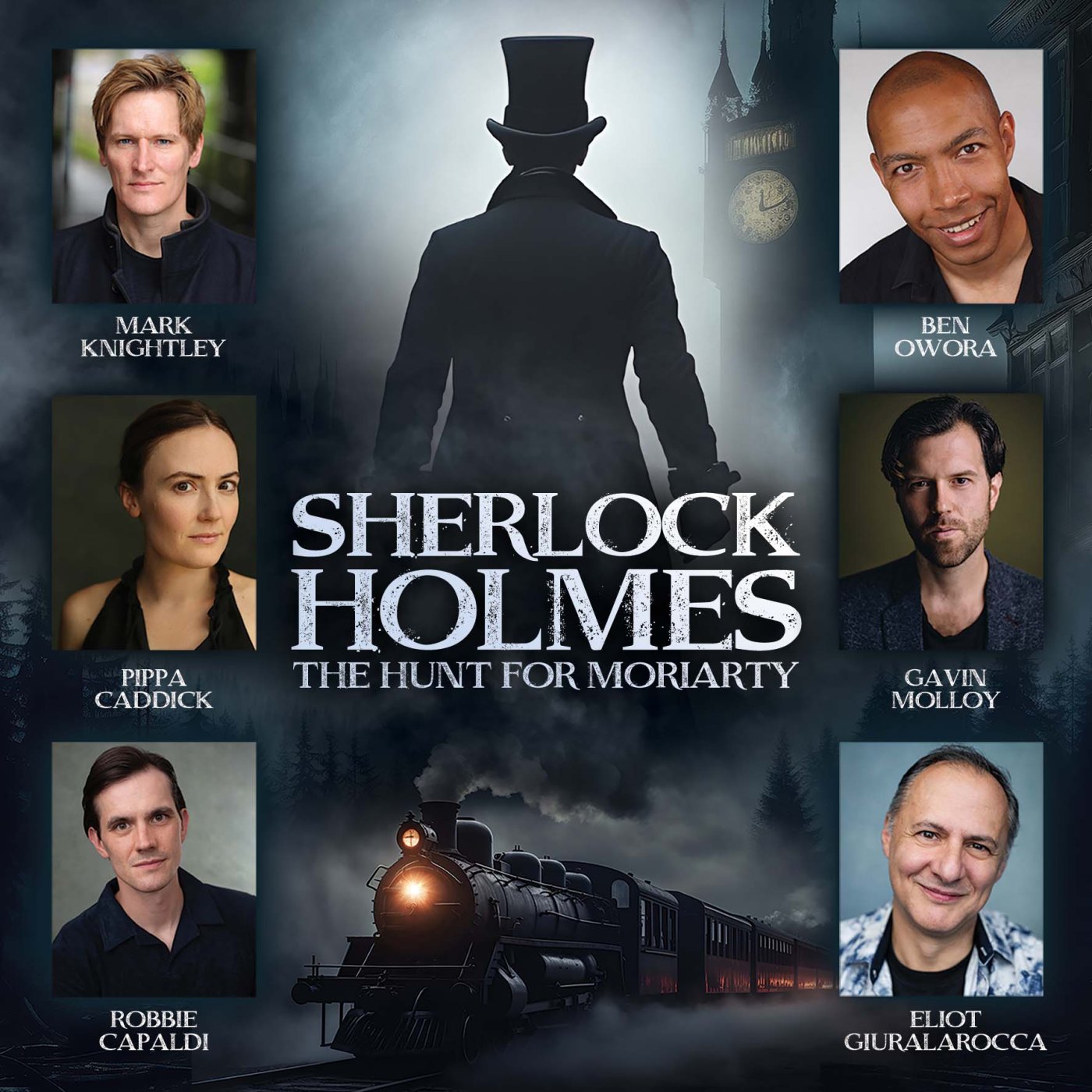
When I was a lad of about 11 or 12 I was addicted to the Sherlock Holmes books. I didn’t read them all, but enough to keep me out of mischief for a few months. Apart from that side effect, I really enjoyed them, so was looking forward to seeing what Blackeyed Theatre had done in turning an exploit of the famous detective into a stage play.
The first thing to say is that this isn’t an adaptation of one of the stories by Sir Arthur Conan Doyle, but a book by Nick Lane based on the original author’s works. As it progressed it struck me that it had utilised the television series Sherlock as its inspiration rather than the original four books and fifty-six short stories. Conan Doyle had Mrs Hudson, the housekeeper at 221B Baker Street, as someone whose role was to take care of the living arrangements so that Mr Holmes could concentrate on his cases. In this play, as in the Benedict Cumberbatch incarnation, she played a significant part in the investigations. It was she who solved the mystery of the body discovered on a London Underground line at Aldgate station, which began the series of events here. She was then allocated a role as researcher at The Morgue, the nickname for the archive of The Times newspaper.
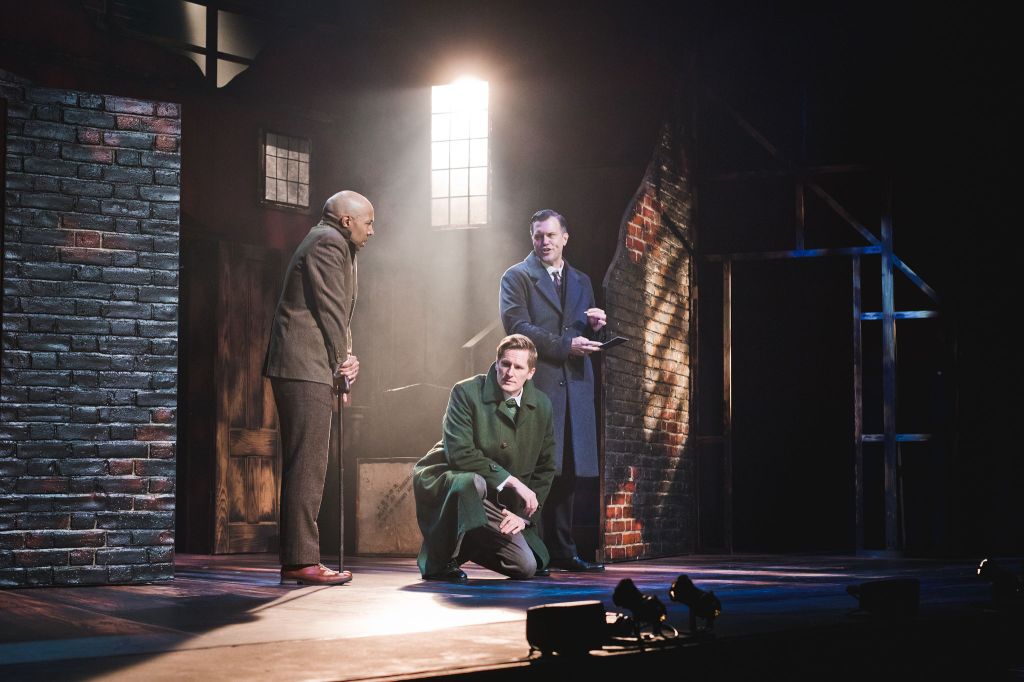
Mark Knightley as Sherlock Holmes, scours the platform at Aldgate tube station for clues, watched by Ben Owora as Dr Watson, left, and Gavin Molloy as Inspector Lestrade
Another similarity was in the presentation, with a back projection showing relevant information as to the contents of notes and letters as well as the settings of the action and mapping the detective’s progress through the various parts of London, and Europe.
The synopsis is far too complicated to precis, but the crux is that the story takes place in 1901 with the British Empire in peril from simultaneous attacks from a mystery assassin who is bumping off a group of spies one by one and a mastermind intent on overthrowing the monarchy and using this to deflect attention from his actions. It will come as no surprise that the villain of the piece is Professor James Moriarty, which actually does come as a bit of a surprise as he was killed in a fight with Sherlock Holmes ten years previously at the Reichenbach Falls. I suppose some artistic licence can be granted here, as Holmes was also reported as having died in the tussle, but because of the outcry from the readers of the stories serialised in The Strand Magazine, Conan Doyle resurrected him some years later, so I suppose we can forgive Nick Lane for doing a similar job with Moriarty.
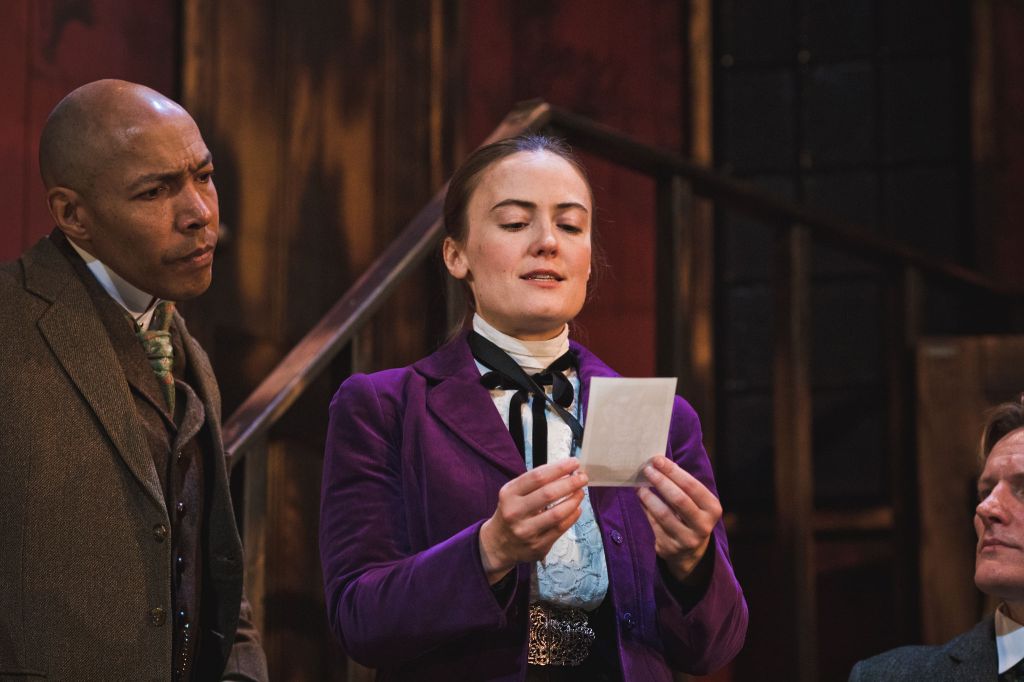
Dr Watson, Ben Owora, studies a note read by Pippa Caddick as Irene Adler.
The first scene is in 221B Baker Street, where fire fighters are clearing up after a blaze at the premises which has destroyed most of the contents except, oddly, for a leather armchair which is in pristine condition! The action unfolds as a series of flashbacks which again made me question why the room was charred and the walls covered in ash from a fire which hadn’t happened yet. No programmes were provided and the website is pretty sparse when it comes to synopsis.
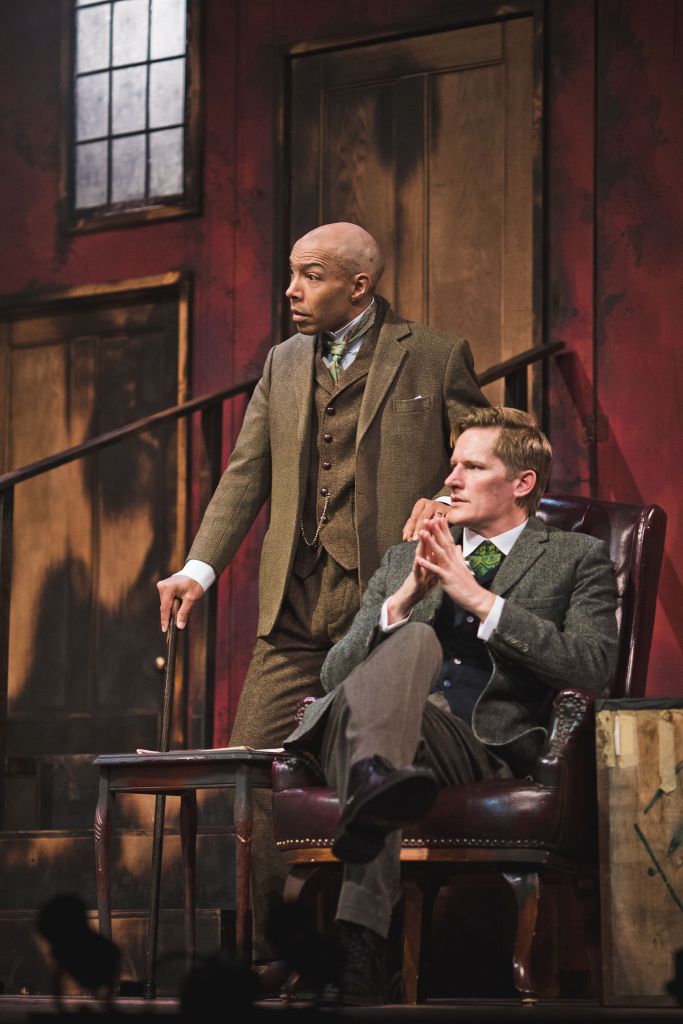
Ben Owora as Dr Watson, musing over a problem with Mark Knightley, Sherlock Holmes, esonced in his immaculate leather chair despite the devastation occasioned to the rest of the apartment.
As I have already said, this is a story by Nick Lane, whose aim seemed to be to include as many of the characters from the original tales as possible, no Hound of the Baskerville, or red haired men, however, but other than that, the bingo card seems to have been almost a full house. Sherlock Holmes’s brother, Mycroft played a major part in the plot, seemingly running the country and the Empire, single-handedly.
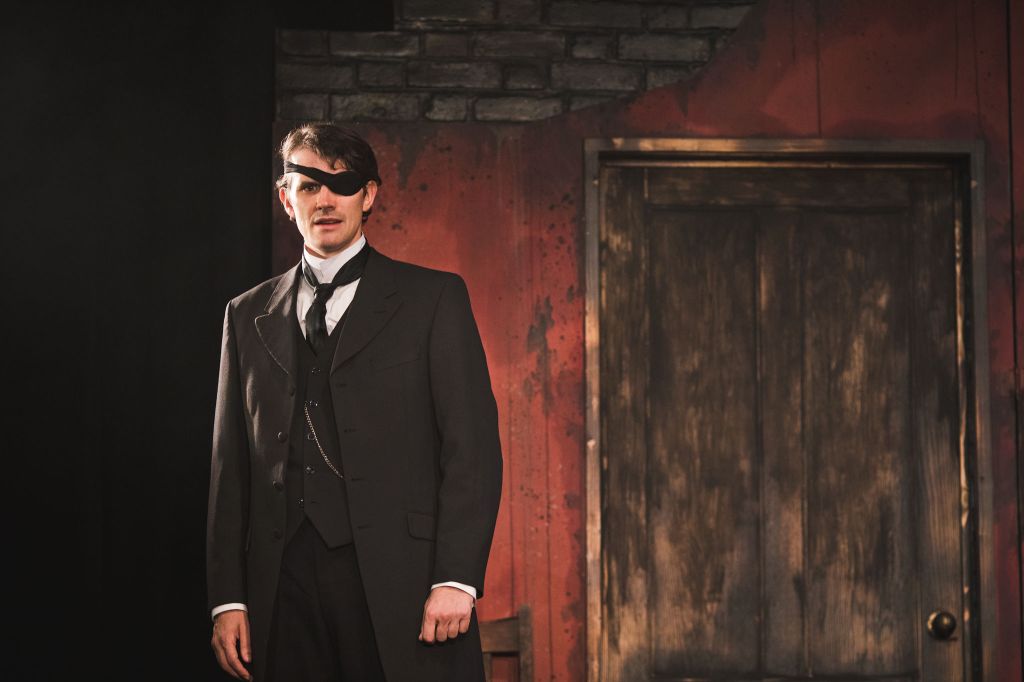
Robbie Capaldi as Sir James DeWilde
This was very much an ensemble piece with all of the actors, with the exception of Mark Knightly, as Holmes, and Ben Owora, Dr Watson, playing multiple roles. Because some of the minor characters were of foreign descent, they were exaggerated and borderline mocked, which might have been in keeping with the Victorian view of the world but gave the impression of the piece turning into a pastiche of itself, thus destroying any tension which had built up. A side effect of the cast of thousands was to turn, what was a fairly good story, into an epic in which to accommodate them all in person rather than give them a mention. The running time of 2 hours 45 minutes including an interval could quite easily have been cut by at least half an hour without detriment to the play. This view seemed to be endorsed by the occasional glow of smart watches being checked towards the end, as well as the more conventional ones with no lighting.
The acting was also in keeping with the period, rather formal and stilted, but I must say that I was incredibly impressed by the memories of the two leads especially, as they were on stage for almost the entire performance and their lines delivered at a pace which hardly dropped throughout.
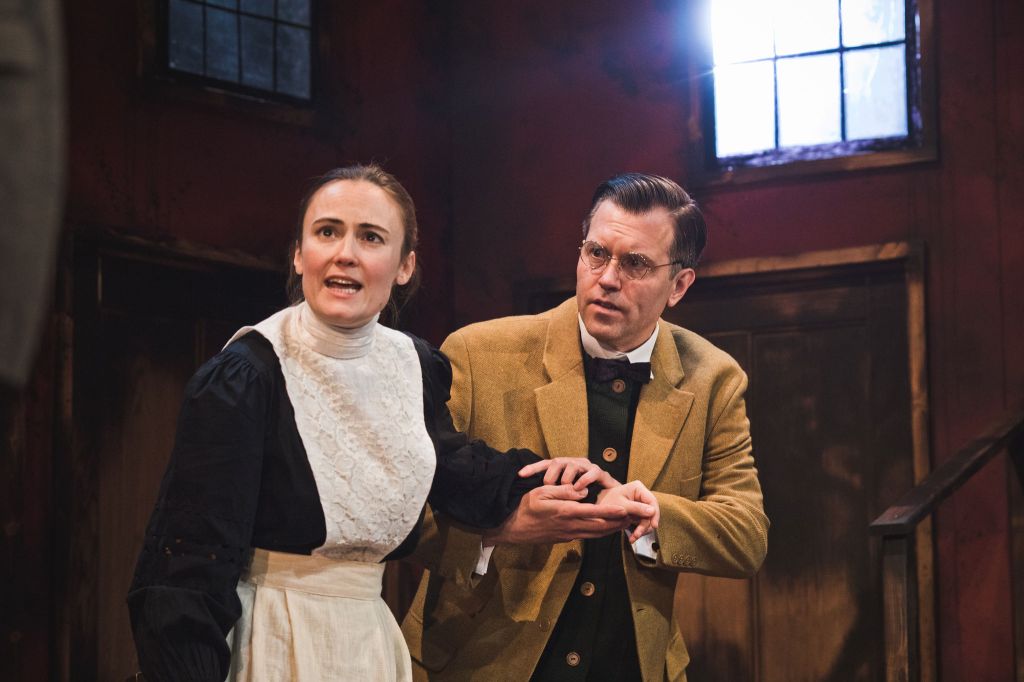
Pippa Caddick as Mrs Hudson with Gavin Molloy as Professor Moriarty
Pippa Caddick handled the roles of Mrs Hudson and the spy Irene Adler, very well, the former appearing a bit simple at first but springing the occasional surprise by giving incisive assessments of some of the more complex situations in which she found herself; as Ms Adler, she exuded sophistication and menace, not to mention athleticism.
Gavin Molloy played Inspector Lestrade, Professor Moriarty, and others, Robbie Capaldi was mainly Sir James DeWilde, Mycroft Holmes’s protege, whilst Eliot Giuralarocca inhabited that role as well as several others, mostly of a comedic type.
If you fancy a hefty chunk of escapism, then Sherlock Holmes: The Hunt for Moriarty, ends its short run at Leeds Playhouse tonight, 12th February, but is then on tour, details of which can be found at https://blackeyedtheatre.co.uk/shows-2/shows/sherlock-holmes-and-the-hunt-for-moriarty/#tab-105202
To see what else is coming to Leeds Playhouse it is https://www.leedsplayhouse.org.uk/whats-on/
Photographs by Asun Olivan
 Tyke It To The Limit